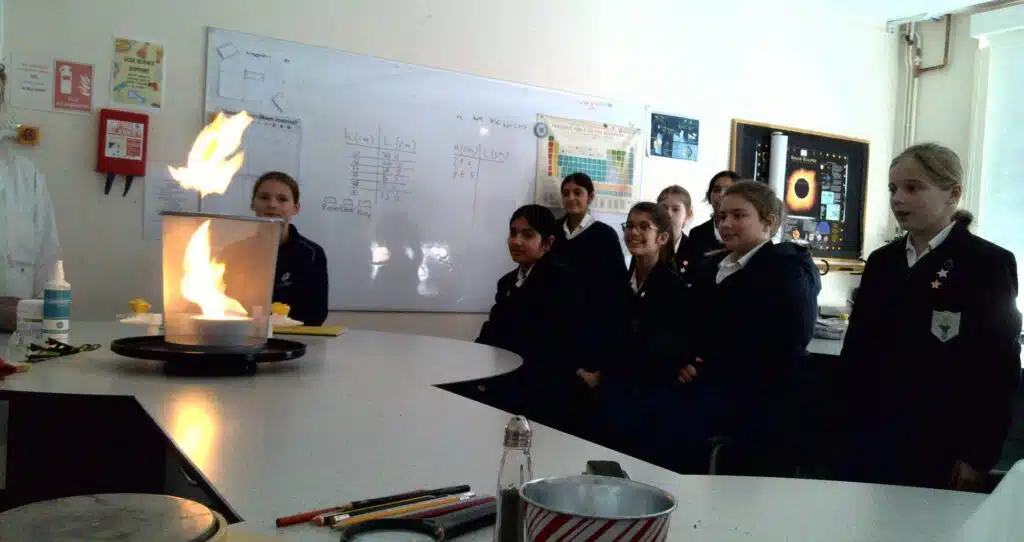
Measuring Energy the Hands-On Way
This week in the science laboratory, students explored a big idea using a small flame: how much energy is stored in food. By safely burning different food samples and using the heat released to warm water in a test tube, pupils were able to compare the relative energy content of everyday foods.
Wearing eye protection and working methodically, students measured temperature changes in the water as each food sample burned. The greater the temperature rise, the more energy had been transferred a clear, visual way to link abstract ideas about energy stores to something tangible and memorable. This practical investigation helped students develop key scientific skills, including careful observation, fair testing and data comparison, while reinforcing the idea that energy can be transferred from chemical stores (in food) to thermal energy (in water). Experiments like this bring science to life, turning calories and kilojoules from textbook terms into real-world experiences complete with flames, focus and plenty of thoughtful discussion.
Alongside the investigation, students were treated to an unexpected (and strictly controlled) demonstration from our science technicians, who shamelessly seized the opportunity to entertain the class with a dramatic firenado. The swirling column of flame sparked plenty of excitement and just as importantly, prompted discussion about convection, air flow and why scientists always respect fire, even when it’s being showy.