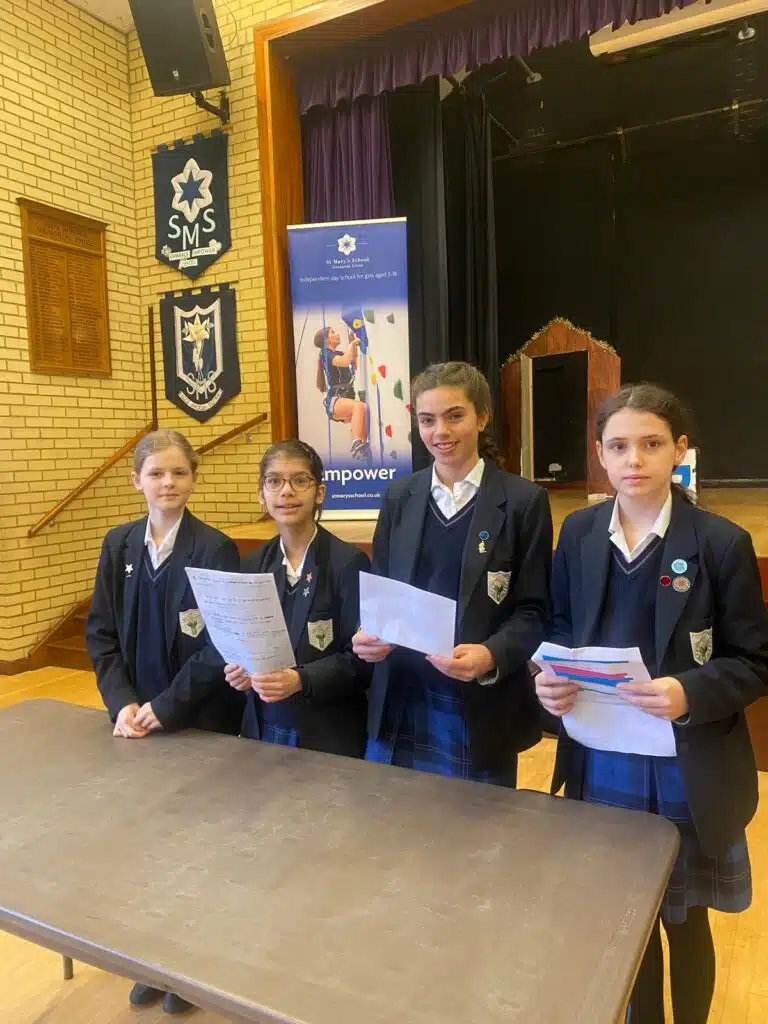
Year 7 Students Lead Powerful Debate on Social Media
Year 7 students recently took to the stage for a lively and thought-provoking debate on the impact of social media and technology. Watched and judged by Year 8 pupils, the discussion explored the benefits, risks and responsibilities that come with growing up online. Each form group had different topics including: Technology should be banned after 8pm for under 13s, Users who are U13 cannot access any form of social media and Online gaming is socially isolating for teenagers.
WhatsApp and Staying Safe
One of the topics discussed in one of the debates was the role of WhatsApp in helping children stay safe. Several speakers explained that messaging apps can be crucial if a child encounters inappropriate or upsetting content online. Students pointed out that WhatsApp is sometimes the only way to quickly contact parents—especially if different devices are being used at home. Without it, some children may struggle to reach a trusted adult when they need help. The message was clear: communication tools, when used responsibly, can provide reassurance and support.
Is TikTok Really That Bad?
Another group introduced the topic of TikTok, challenging the idea that it is entirely harmful. While acknowledging that some disturbing content exists, they reminded the audience that users can report inappropriate videos or scroll past them.
They also suggested that social media is not necessarily the problem; how it is used matters. Setting time limits and using platforms responsibly were presented as practical solutions. However, they emphasised that children under eight should not have social media, as their brains are still developing.
The Impact on Teenagers
Statistics shared during the debate gave the audience plenty to think about. On average, teenagers spend around five hours a day on social media. Over time, this adds up to an astonishing 16.8 years of their lives spent on screens.
Speakers explained how social media triggers dopamine release in the brain, creating short-term pleasure. However, this can also lead to negative emotions such as anger, anxiety and depression. One student highlighted how not receiving “likes” can seriously affect self-esteem.
Perhaps the most sobering statistic shared was that social media is linked to 24% of suicides among young people aged 10–19, with factors such as peer pressure, body image concerns and cyberbullying playing significant roles.
AI, Deepfakes and Online Dangers
The debate also explored the growing presence of artificial intelligence online. Students discussed how AI is increasingly used to create deepfakes, images or videos that appear real but are completely fake. Many people may not even realise that much of the content they see online could be AI-generated.
There were also warnings about the dangers of interacting with strangers online. Speakers explained how some individuals can build trust before pressuring young people into sharing personal information or images. The importance of reporting suspicious behaviour and speaking to a trusted adult was strongly emphasised.
Creating positive relationships
Another debate explored developing positive real life friendships and the importance behind this. They challenged the idea of online friends not necessarily being real and how harmful this can be to a person. They also presented how socially isolating gaming can be as it takes people away from every day activities or time with their family.
Recommended Reading and Next Steps
Students shared useful resources for learning more about online safety and healthy social media habits, including:
• The Amazing Generation
• The Social Media Survival Guide
• I Dare You
The debate concluded with clear action points for both students and parents:
• Educate children and teenagers on how to stay safe and report inappropriate content.
• Encourage parents to set time limits and monitor social media use.
• Provide guidance on maintaining healthy online habits and protecting mental health.
The Year 7 debates were all engaging and informative, giving everyone in the audience the chance to reflect on their own digital habits. It was an excellent example of thoughtful discussion, preparation, teamwork, respectful disagreement and confident public speaking. Well done to all those who took part!

